There is no one-size-fits-all solution when it comes to batteries, especially those used in automotive applications.
For electric vehicles, automakers use different chemistries, cell formats and package designs based on trade-offs around cost, range and performance — much like how engines range from small naturally aspirated four-pots to turbocharged V8s. But if you’re an electric car enthusiast or just someone interested in this field, how do you make sense of it all?
For anyone interested in the world Electric vehicle batteriesHere’s an analysis of the key chemistry that powered early electric vehicles, what today’s models use to get going and the technologies shaping the future. If you’re already well-versed in this world, let us know if we’ve missed any major chems on the horizon, or ones that have left a mark in the past. Let’s dig deeper.
Lead acid

Photography: Photopia
Lead-acid batteries are the oldest rechargeable batteries still in widespread use. They are cheap, reliable and easy to recycle. Which 12 volt battery In your gas car and Your electric car? It’s a lead-acid battery, as has been the case for decades.
However, they are heavy, and not as energy dense as lithium-ion batteries, which is why they tend to be unsuitable for modern electric vehicles.
Today, they are mostly used for starter batteries in gas vehicles for less demanding auxiliary functions such as cabin lights, power windows and infotainment displays. In the late nineties, the first generation GM EV1 The lead acid battery was used before GM pivoted to nickel metal hydride Later version.
Nickel metal hydride (NiMH)
Photo by: Toyota
Nickel-metal hydride batteries came before modern lithium-ion cells, and are widely used in hybrid cars. They are durable and generally tolerant in most types of climates, but suffer from the same weight and energy density issue as lead-acid batteries.
Ni-MH packs are still common in most hybrid vehicles sold in the United States, especially those made by Toyota. But they are slowly being replaced by lithium-ion packs, which are more reliable and energy-dense.
Lithium manganese oxide (LMO)
Official battery display for the 2016 Chevy Volt.
LMO batteries use a manganese-based cathode, which is cheaper and more thermally stable than nickel-rich chemicals. They can provide high power and fast charging, but they degrade faster and have lower energy density. The mixture of LMOs was used in early electric cars such as the first generation Nissan leaf and Chevy Voltbut has largely lost popularity for long-range applications since then.
Nickel Manganese Cobalt (NMC)
Photo by: Porsche
The mixture of nickel, manganese and cobalt is the dominant cathode active material outside China. NMC batteries are energy dense and have a widely established supply chain and manufacturing base, which is why they are popular in long-range electric vehicles.
The vast majority of electric vehicles in the United States, including those made by Hyundai, Kia, BMW, Volkswagen and Toyota, use NMC cells. Some disadvantages include higher cost, less range at cold temperatures, and lower thermal stability compared to other chemistries.
Nickel, cobalt, and aluminum (NCA)
Photo: Panasonic Energy
NCA packets switch a file Manganese is expensive along with aluminumwhich improves cathode stability and reduces degradation. Some battery manufacturers also add aluminum to the existing mix, creating the NCMA chemistry, which dominates GM’s trucks and SUVs.
NCA batteries are energy dense, and Tesla has long used Panasonic’s NCA batteries in its models. But they have similar drawbacks to standard NMC batteries, such as high cost and the need for advanced cooling to keep the pack running efficiently.
Lithium iron phosphate (LFP)
The chemistry that has won the mass market segment globally ditches expensive nickel, manganese and cobalt for iron phosphate. Get rid of these dirty and expensive materials It means that LFP batteries are cheaper, safer and have a long cycle life. Energy density is affected, but battery makers have been able to overcome this with solutions such as prismatic cells and cell batteries. LFP is popular in China. In the United States and Europe, more automakers are now using them in more affordable models.
Lithium manganese iron phosphate (LMFP)
These are LFP batteries, but with enhanced performance and range thanks to the addition of manganese. Chinese battery manufacturer Gotion claims LMFP battery It can last over 1,800 cycles at high temperatures and provides a range of 621 miles.
Chinese company CATL is quiet about the configuration of its “M3P” battery, but in Research paperShe said the battery contained “phosphate, manganese or other metals.” the Luxid S7 It uses a CATL M3P battery, and as of last year, CATL was also working with Tesla Development and validation This new cell.
Lithium and manganese rich (LMR)
Photography: Patrick George
LMR is the Western version of LMFP. North America and Europe do not have the same dominance of the LFP supply chain as China, but the regions are now recognizing the importance of manganese in EV batteries to reduce costs and rely less on NMC. LMR batteries reduce the proportion of nickel and cobalt and increase the proportion of abundant manganese and their supply chains do not depend on China. The result is a driving range similar to that of NMC batteries, at costs similar to LFP packs.
GM and Ford Both develop LMR cells. GM aims to deploy it by 2028 on full-size SUVs and trucks, targeting a driving range of more than 400 miles.
Silicon/synthetic graphite anode
Photo by: InsideEVs
This is not technically battery chemistry, but a subcategory of the same type. Battery makers are trying to replace the traditional graphite anode with a better, more energy-dense, slimmer material. They have increasingly been experimenting with graphite or synthetic silicon produced in the laboratory.
two American companies, Group 14 Technologies and Sionic Energy claim to have developed production-ready silicon anodes, which they say could shrink battery size without compromising range. Silicon anodes are already popular in Chinese smartphones, and could soon become more common in electric vehicles if battery makers can mass-produce them at affordable prices.
Lithium metal
Another way to replace the anode is to develop lithium metal batteries. According to researchers. Unlike current graphite anodes, lithium metal batteries use a thin layer of lithium itself as the anode. It is lighter and holds more charge. This is an upside. The downside is that lithium metal can cause dendrites – the growth of small, sharp spikes that can damage the battery.
In theory, lithium metal is one of the most energy-dense anode materials, but it is also one of the most difficult to develop and scale. Many battery startups, such as the one in Massachusetts Global energy It is based in California QuantumscapeThey operate on lithium metal batteries.
Sodium ion
Photography: Cattell
Sodium-ion batteries are emerging as LFP alternatives for budget electric vehicles and energy storage systems, especially in China. Instead of moving lithium ions between electrodes, these batteries simply use sodium ions.
studies These results indicate that sodium is 1,000 times more abundant than lithium in the Earth’s crust, but is less energy dense, making it suitable for low-range applications such as e-scooters and small electric cars. CATL has already begun manufacturing Low-voltage sodium-ion batteries for large trucks and high-voltage batteries for electric vehicles, both of which seem to maintain exceptional performance even in extremely cold climates.
Solid state batteries
Photography: SK On
In traditional lithium-ion batteries, the substance that facilitates the charging and discharging cycles is a liquid chemical. Solid state batteries Replace this liquid with a solid, which can be ceramic, polymer, or sulfide. Battery makers say solid electrolytes can extend driving range, enable faster charging, increase durability and improve performance in extreme weather. The problem is mass production at lower costs without defects. For this reason, semi-solid batteries, which use a gel-like electrolyte, are expected to reach the market first, long before fully solid-state packs.
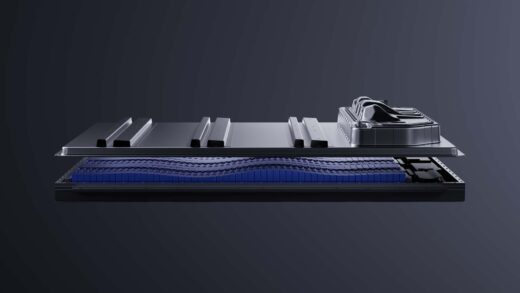
Getting the perfect trade-offs in battery chemistry is not the ultimate solution to delivering the best possible range, charging times, durability, and lifespan. How they are packaged into different cell shapes – such as cylindrical, bag and prismatic cells – also plays a big role in how your electric car performs.
In addition, the way these cells are integrated into the vehicle, using modules or direct installation in the package or body of the vehicle, can significantly impact the design and efficiency of the electric vehicle. We’ll delve deeper into these topics in a separate story, so stay tuned.
Do you have any advice? Contact the author: suvrat.kothari@insideevs.com